Approach
Nothing is made before it is understood.
Five stages, followed in order. The intention is that no one is surprised by what arrives, what it costs, or how long it took.
How work moves from brief to delivery
- 01
Brief and context
- 02
Written scope
- 03
Creative direction
- 04
Production and review
- 05
Final delivery
The exact scope, schedule, review points, ownership and fees are agreed in writing before production begins.
The stages usually run in this order: Brief and context, then Written scope, then Creative direction, then Production and review, then Final delivery. Not every project follows the same fixed stages; the sequence is adapted to the brief.
- 01
Conversation
We start with a call or written exchange to understand the objective, the audience and the constraints. If the studio is not the right fit, we say so at this stage.
- 02
Written scope
Before any creative work begins, we set out in writing what is being made, what is included, who is responsible for what, and how the work will be reviewed.
- 03
Direction
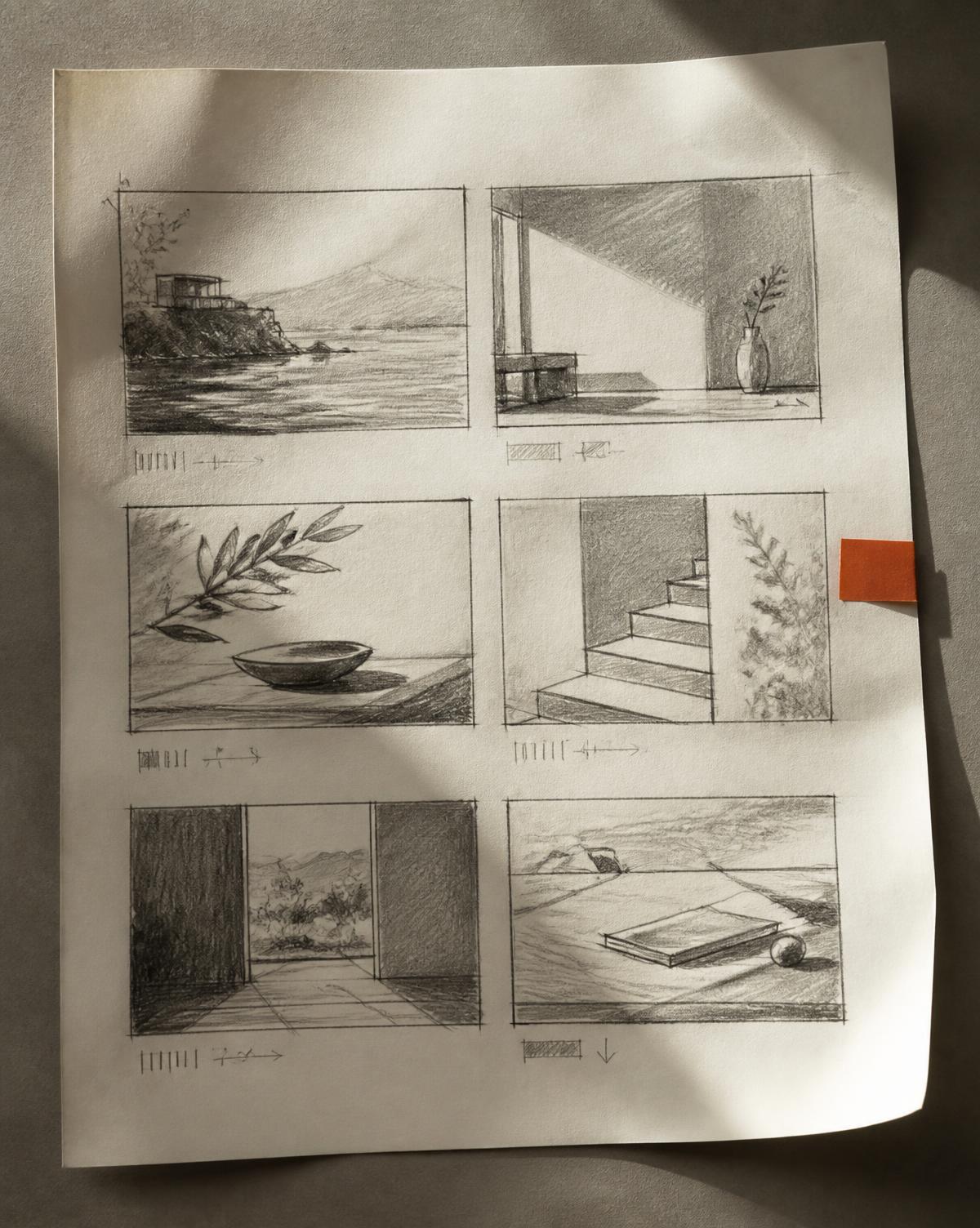
We agree the creative direction on paper — references, structure, tone — so that production begins from a shared understanding rather than a guess.
- 04
Production
The work is made by the studio, with agreed review points. Changes within the scoped direction are expected; changes to the direction itself are re-scoped openly.
- 05
Handover
Final files are delivered in the formats and structures the client's team publishes with, together with usage notes and the source material agreed in scope.
Working terms
Each engagement is governed by a written agreement issued by Five Yards Media LLCcovering scope, deliverables, review points, ownership and fees. We do not begin production before that document is signed.
Timelines are set per project against the scope agreed, not against a standard turnaround. Where a date is critical, we say at the outset whether it is achievable.
Engagement
Four ways to work with the studio.
Single project
One defined outcome with a written scope, a fixed fee and an agreed delivery date. The most common way clients start with the studio.
Suits: A launch, a rebrand, a shoot, a campaign.
Phased programme
A larger body of work split into phases that are individually scoped, approved and invoiced, so neither side commits to a year of assumptions on day one.
Suits: Multi-stage rollouts and staged openings.
Monthly retainer
A reserved allocation of studio time each month against an agreed plan, reviewed quarterly. Priority scheduling, one point of contact, no re-briefing from zero.
Suits: Ongoing content and in-house teams needing capacity.
Advisory
Direction, review and creative oversight of work produced elsewhere, without the studio holding production. Priced by session or by month.
Suits: Teams with production capability but no settled direction.
Delivery
What arrives, and in what state.
Formats you can publish with
Final files are delivered in the sizes, colour spaces and file structures your channels require — print-ready, web-optimised and social crops — not a single master file and a shrug.
Named and organised
Every delivery arrives in a consistent folder structure with a naming convention, a contents note and a short guide to which file goes where.
Licensing written down
Usage rights, territory, duration and any third-party licences are stated in the scope and repeated in the delivery note, so nobody guesses two years later.
Archived and retrievable
Source material agreed in scope is retained for twelve months from delivery and can be re-issued on request within that period.
Questions
Asked often enough to answer here.
- How quickly can you start?
- Scoping conversations usually happen within a week of an enquiry. Production start depends on the calendar at the time; the studio holds a limited number of concurrent engagements, so we give you a real date rather than an optimistic one.
- Do you work outside Sharjah?
- Yes. We work across the United Arab Emirates as standard, and elsewhere in the GCC where the brief justifies it. Travel and accommodation outside the emirates of Sharjah, Dubai and Ajman are quoted at cost and shown separately on the proposal.
- Do you work in Arabic as well as English?
- Studio direction and documentation are produced in English. Arabic copy, adaptation and typesetting are delivered with established partner linguists under our direction, and that arrangement is stated in the scope rather than implied.
- Who owns the finished work?
- On full settlement of the fee, ownership of the final approved deliverables transfers to the client, subject to any third-party licences — fonts, stock, music or talent — which are listed in the scope with their own terms.
- Will our project be published on your website?
- Only with written permission. If you would prefer the work stays private, that is the default and it costs nothing to say so.
- Can you work alongside our existing agency or in-house team?
- Frequently. Where the studio is one contributor among several, we ask that the division of responsibility is written down at the start so nobody is directing the same work twice.
- What does a project typically cost?
- Published fees on the Services page are the studio's standard figures for the scopes described. Bespoke programmes are quoted in writing after a scoping conversation, with the assumptions behind the number shown.
- How is payment handled?
- A written scope is issued first. Once accepted, the studio invoices a 50% deposit and schedules the work against the cleared payment, with the balance due on delivery unless a milestone schedule is agreed.
Enquiries