Planning a shoot in the UAE: heat, permits and the hours that actually work
Production · 30 January 2026 · 7 min read
Most production problems in this region are not creative problems. They are calendar problems, permit problems and temperature problems, and all three are solvable weeks in advance.
Contents
- 01 The light is better than the schedule suggests
- 02 Permissions take longer than the shoot
- 03 Build the day around traffic, not distance
- 04 Weekends, prayer times and Ramadan
- 05 Kit, dust and the things that fail
The light is better than the schedule suggests
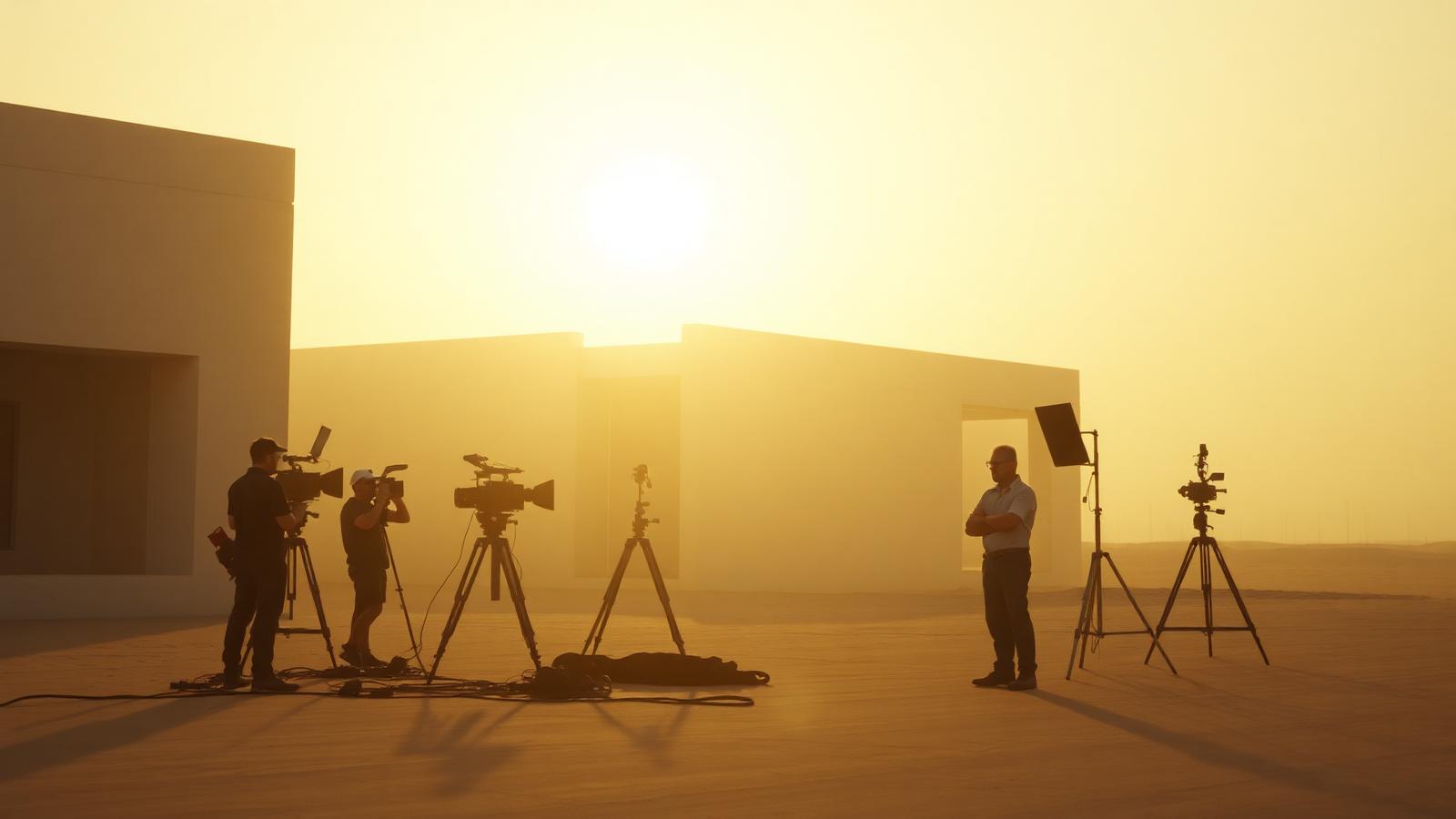
Between November and March, the useful exterior window is generous and the light is clean well past mid-morning. Between June and September it collapses: the honest exterior window is roughly first light to around 09:00, and again in the last hour before sunset.
We plan summer exteriors as two short blocks with an interior or studio segment between them, rather than pretending a continuous ten-hour day exists. Crew performance in the afternoon heat is a real production variable, not a matter of endurance.
Permissions take longer than the shoot
Filming in public areas, malls, free zones and most waterfront developments requires permission from the relevant authority or property owner, and the lead time varies widely by emirate and by location. Drone work carries its own separate approvals and no-fly considerations.
We identify every location's permission route during pre-production and put the lead times in the schedule as line items. Where an approval is uncertain, we carry a named alternative location rather than hoping.
A shoot day is won or lost in the three weeks before it, not in the twelve hours it occupies.
Build the day around traffic, not distance
A location twenty-five minutes away at 06:00 can be seventy minutes away at 08:00. Company moves between Sharjah and Dubai during peak hours quietly consume the contingency the schedule was relying on.
We prefer one location per half-day with a single planned move, and we set call times that put the unit on the road before the corridor fills rather than during it.
Weekends, prayer times and Ramadan
The working week runs Monday to Friday, with Friday afternoons lighter for many teams. Schedules should accommodate prayer times without making an event of it — a well-planned day simply has the breaks in the right places.
During Ramadan, working hours shorten, catering is handled differently and public-facing production requires more sensitivity. We plan Ramadan shoots as shorter days at a lower intensity and adjust the crew size accordingly rather than compressing a normal day into fewer hours.
Kit, dust and the things that fail
Fine dust and rapid temperature changes between air-conditioned interiors and exterior heat cause condensation on glass and shorten battery life. We acclimatise bodies and lenses before rolling, carry more power than the day calls for and treat lens changes outdoors as something to minimise.
None of this is exotic. It is simply the difference between a production that finishes on schedule and one that spends its final hour troubleshooting.
Written by the studio at Five Yards Media LLC, Sharjah, United Arab Emirates.